Updated 2026-10-23·10 min read·By On The Grind Stump Removal Arborist Team
Should You Leave a Tree Stump? Termites, Fungus and Regrowth
No, you should never leave a tree stump in your yard in Georgia. Decaying stumps act as direct subterranean bridges for eastern subterranean termites (Reticulitermes flavipes) and carpenter ants within 150 feet of your foundation, spread Armillaria root rot to nearby trees, generate persistent zombie suckers, and shatter lawnmower blades. Mechanical grinding ($91–$120) eliminates the nest core, preventing thousands in structural repairs.
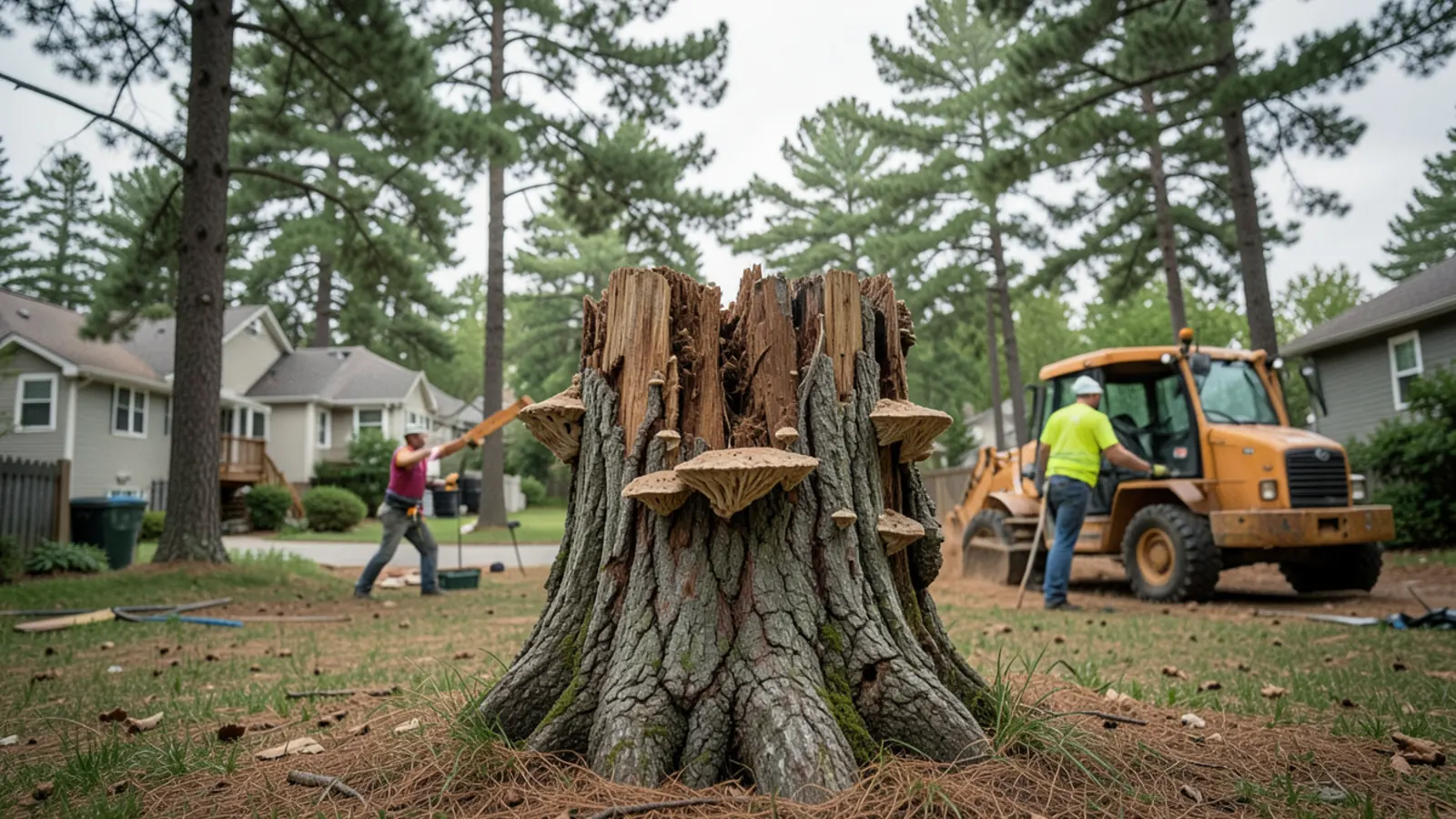
The biological hazards of leaving a dead tree stump to rot in your yard.
Mandatory Georgia 811 Utility Locate
35" Narrow Gate Access
4" to 12"+ Grind Depth
Complete Chip Cleanup & Backfill
Fast Phone & Photo Estimates
The Termite Magnet: How Decaying Wood Bridges Insects to Your Foundation
Metro Atlanta sits squarely in the highest termite hazard zone in North America. Eastern subterranean termites (Reticulitermes flavipes) are constantly foraging through Georgia red clay in search of cellulose. A dead tree stump acts as an ideal underground nesting platform, providing hundreds of pounds of moist, slowly rotting wood along with consistent subterranean shelter.
As the termite colony flourishes inside the decaying heartwood, worker termites construct exploratory mud foraging tubes outward in a radial pattern spanning up to 150 feet. If that tree stump sits within thirty or forty feet of your home, crawlspace, or wooden deck posts, the termite colony will inevitably find and infiltrate your residential framing. Grinding the stump 8 to 10 inches below grade eliminates this massive central nesting harbor, breaking the reproductive cycle and protecting your home.
Pest & Property Risk Matrix: What Happens When Stumps are Abandoned
Leaving a tree stump in north Georgia is not a benign decorative decision; it creates active biological hazards and physical liabilities across your parcel.
Stump Hazard Factor
Biological Mechanism / Threat
Property & Financial Impact
Mechanical Grinding Solution
Subterranean Termites
Colonies nest in moist root core, foraging up to 150 ft outward
$3,000 – $10,000+ in structural timber & framing damage
Grinds heartwood 8–10" below grade, destroying central nest platform
Black Carpenter Ants
Excavate nesting galleries in soft heartwood; forage into kitchens
Infests crawlspaces, wall voids, and damp subflooring
Spreads parasitic rhizomorphs through root grafts to live plants
Kills adjacent ornamental trees, hydrangeas, and boxwood hedges
Severs root collar and aerates soil, halting underground mycelial spread
Zombie Root Sprouts
Adventitious buds on root flare send up dense woody thickets
Chokes lawn turf, requires endless weekly pruning
Pulverizes root collar nodes, permanently starving subterranean root system
Mower Crankshaft Damage
Hardwood collision bends motor shaft and shatters blades
$250 – $800 in small engine repairs or replacement
Removes all wood below turf line, allowing continuous, safe mowing
Yellow Jacket Wasps
Nests inside hollowed-out rot cavities beneath the stump cap
Severe stinging hazard for children, pets, and lawn care workers
Collapses subsoil voids and backfills cavity with compacted organic mulch
Subterranean Termite Castes and Radial Foraging Dynamics
Subterranean termites do not sleep or hibernate during warm southern winters; they forage continuously 24 hours a day. An established termite colony can number between 250,000 and two million individuals organized into specialized castes: the reproductive king and queen, soldier termites that defend nest tunnels, and sterile worker termites that consume cellulose and feed the colony. A large dead stump provides the high-moisture microclimate necessary for queen oviposition and rapid colony expansion.
When the primary wood source within the stump core begins to diminish or dry out, the colony sends out exploratory foraging workers along natural root channels and moisture gradients. These foraging tunnels frequently lead straight to crawlspace sill plates, basement window framing, or wooden expansion joints in brick veneer. By grinding the stump below grade and aerating the soil, you eliminate the central nest core before foraging columns establish contact with your foundation.
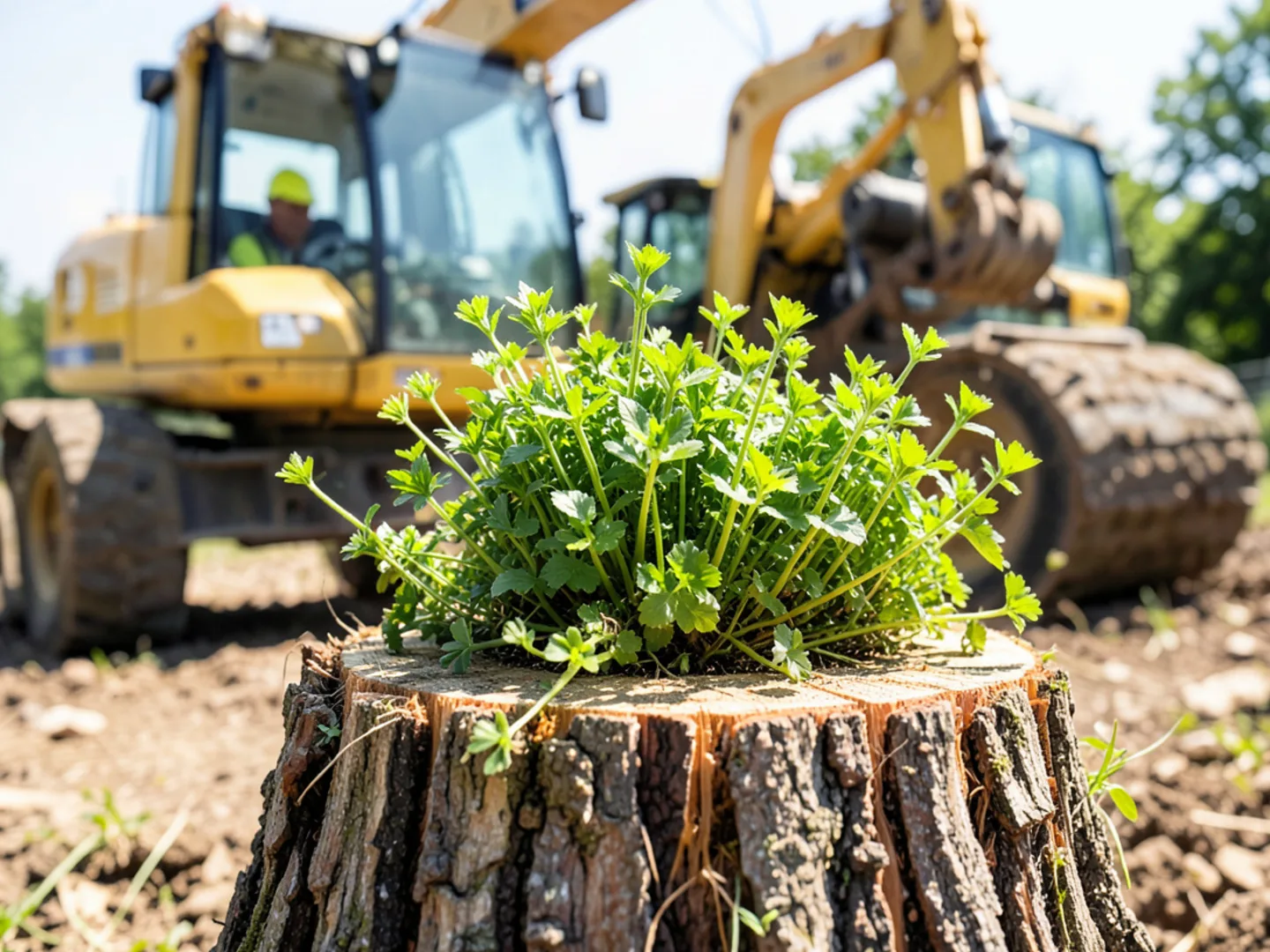
Living root systems continue to send up unsightly suckers until mechanically ground.
The 7-Year Myth: Why Chemical "Stump Roter" Products Fail in Hard Clay
A persistent myth circulating among DIY homeowners is that drilling holes into a tree stump and pouring in chemical "stump out" pellets (potassium nitrate) or Epsom salts will quickly dissolve the wood. In reality, chemical decomposition in north Georgia’s dense, compacted red clay is an agonizingly slow and ineffective process.
Potassium nitrate accelerates decay only if wood-rotting microbes have abundant oxygen, constant moisture, and moderate temperatures. In reality, a large hardwood stump treated with chemical pellets typically takes five to eight years to soften—during which time the wood becomes a soggy, sponge-like nursery for termites, carpenter ants, and fungal spores. Furthermore, runoff from chemical stump removers can leach nitrates into nearby flower beds or contaminate shallow residential drainage lines. Mechanical stump grinding achieves complete wood elimination in under forty-five minutes with zero toxic chemical residue.
Spreading Honey Fungus (Armillaria) and Lawn Pathogens
As a dead stump decomposes, it becomes colonized by aggressive wood-rotting fungi, most notably Armillaria mellea (commonly known as honey fungus). While the above-ground fruiting mushrooms may appear harmless, the fungal mycelium spreads subterraneously through the root system. This fungal pathogen can attack and infect adjacent live ornamental trees, shrubs, and foundation boxwoods through root grafts.
Furthermore, rotting stumps produce toxic slime molds and fungal spore blooms that spread across your lawn turf, causing localized brown patch disease and fairy rings in Bermuda and Zoysia grasses. Pulverizing the stump and aerating the soil halts localized fungal dominance and restores healthy soil microbiology.
The Zombie Tree Effect: Persistent Root Sprouts and Suckers
Certain hardwood species common across Marietta—such as sweetgum, crape myrtle, silver maple, and willow oak—refuse to die simply because their upper trunk was felled. The living root system retains extensive carbohydrate reserves and responds by sending up dozens of aggressive vertical shoots known as "suckers" or epicormic sprouts.
Within weeks of tree removal, your lawn can be overtaken by a dense, brushy thicket of woody shoots bursting through turfgrass and flower beds. Mowing over them simply encourages denser branching. Complete mechanical stump grinding severs the root crown and collar nodes where sprouting buds concentrate, permanently starving the subterranean root network and ending the cycle of endless sucker pruning.
Lawnmower Blade Destruction and Serious Yard Tripping Hazards
Even when a tree service cuts a trunk close to the ground, the wood sits just high enough to wreak havoc on lawn equipment. Striking an immovable hardwood stump or protruding surface anchor root with a rotary lawnmower can instantly bend the engine crankshaft, shatter expensive commercial mower blades, and crack mower decks—resulting in hundreds of dollars in repair bills.
Beyond equipment damage, low-cut stumps concealed by overgrown summer grass represent severe trip-and-fall hazards for children playing in the yard, elderly relatives, and delivery couriers. In residential rental properties and HOA common areas, an unground stump represents immediate premises liability exposure.
Carpenter Ants, Wood-Boring Beetles and Secondary Rodent Nesting
Termites are not the only pests that colonize decaying tree stumps in north Georgia. Black carpenter ants (Camponotus pennsylvanicus) frequently establish satellite nesting colonies inside soft, decaying stump wood. Unlike termites, carpenter ants do not consume wood for nutrition; instead, they hollow out intricate, smooth galleries to shelter their brood. From this staging ground in your yard, foraging worker ants migrate directly into wall cavities, seeking kitchen food sources and infesting moist subflooring.
Additionally, hollowed-out stumps with rotting root bowls create sheltered subterranean cavities that attract mice, rats, and yellow jacket wasps. A yellow jacket nest established inside an old pine stump hollow represents an immediate, severe stinging hazard for family members and pets. Pulverizing the stump below grade eliminates these protective nesting cavities completely.
The Bottom Line: Grinding is Inexpensive Prevention
Compared to the thousands of dollars required for structural termite remediation, lawnmower crankshaft replacement, or personal injury claims, professional stump grinding is an inexpensive one-time service. For an average cost of $91 to $120 per stump in Marietta, you eliminate pests, protect your equipment, and restore your yard to full health. Call On The Grind at (321) 677-9055 for a rapid, guaranteed quote.
Need Help with a Tree Stump in Marietta?
Call our local East Cobb team at (321) 677-9055 for an instant, tape-measured phone quote.
No forms to fill out · Fast answers from local specialists · Georgia 811 utility safe
Frequently Asked Questions
No. Chemical stump removers (potassium nitrate) take 4 to 7 years to soften a hardwood stump, and they release chemical compounds into the surrounding soil. Mechanical stump grinding eliminates the stump completely in under an hour.